Summarize this blog post with:
 ChatGPT
 Perplexity
 Claude
 Grok
Your referral software shows you the leak. Here's what actually stops it. American hospital systems lose over $150 billion annually due to patient referral leakage. Meanwhile, an estimated 89% of medical practices still rely on paper faxes to transmit orders. Traditional referral management software tracks these incoming requests, but tracking alone cannot convert an unread fax into a scheduled appointment. Read more to learn about referral management and referral automation, which helps you to stop revenue leaks and improve EBITDA. If you are new to the topic, start with what is a referral in healthcare and why lost referrals leak revenue.
What Is Referral Management Software?
A traditional referral management software platform serves as a digital system of record, centralized inbox, and process tracking repository. It aggregates inbound orders from e-faxes, web portals, and electronic health records (EHRs), organizing them into queues for administrative staff.
Typical features include digital fax inboxing, searchable provider directories, status tagging, and high-level leakage analytics. However, passive software relies entirely on human labor. Staff coordinators must continue to manually read faxed packets, re-key patient data into the EHR, place phone calls to patients, verify insurance eligibility, and manually request consult notes from specialists. While a referral management system standardizes visibility, functioning primarily as a task generator that grows administrative backlog as volume increases.
What Is Referral Automation?
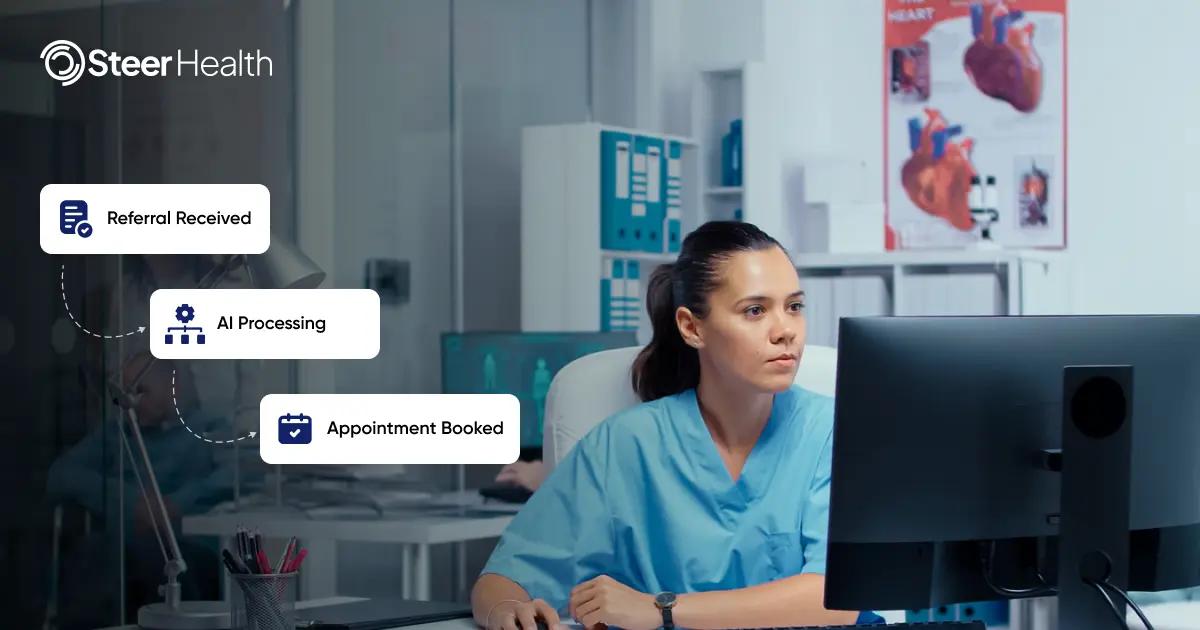
Referral automation represents an active operational engine that executes administrative tasks autonomously without requiring human intervention for routine steps. Built on artificial intelligence (AI), Intelligent Document Processing (IDP), and bidirectional FHIR/HL7 APIs, an automation platform ingests unstructured referral documents, extracts clinical details into discrete EHR fields, and drives immediate patient outreach.
Unlike passive tracking tools, AI referral management engines do the actual work. They parse 20-page fax packets in seconds, run automated prior authorizations, contact patients via interactive voice or SMS, book appointments directly onto provider calendars, and electronically retrieve completed consult notes. Staff step in only as exception managers when the AI flags a complex clinical case or a low-confidence data extraction.
Referral Management vs. Referral Automation: Side-by-Side
| Operational Workflow | Referral Management Software | Autonomous Referral Automation |
|---|---|---|
| Data Ingestion | Manual data entry into EHR from digital fax queues | AI document processing (IDP) extracts unstructured text directly into EHR fields |
| Patient Outreach | Generates manual call lists for staff coordinators | Automated multi-channel sequences (SMS, voice AI) with direct booking links |
| Scheduling | Staff manually contact patients and re-key calendar slots | Real-time, bidirectional EHR calendar booking based on provider rules |
| Eligibility & Prior Auth | Staff check payer portals manually or follow static hyperlinks | Automated electronic prior auth (ePA) submissions and real-time coverage checks |
| Loop Closure | Logs booking status; staff manually chase consult reports | Automatically tracks visits and ingests returned consult notes into referring EHRs |
| Reporting & Visibility | Historical leakage analytics and queue status dashboards | Real-time conversion tracking and capacity-aware revenue attribution |
| Staff Effort | Manual touches required for 100% of referrals | Absorbs up to 80% of routine task burden; staff manage exceptions |
Where Referrals Break Without Automation
Between initial order creation and a completed consultation, manual workflows introduce friction that causes several sources of severe revenue loss:
- Fax Retyping and Data Traps: Unstructured faxes sit in digital inboxes for days. Manual re-keying takes an average of 12 minutes per referral, creating massive processing bottlenecks.
- Delayed Patient Outreach: Reaching a patient within 15 minutes of referral creation yields a 65% to 80% appointment conversion rate. Whereas manual outreach typically takes days or multiple hours, leading to 45% of physician referrals ending in a no-show or total abandonment.
- Unconfirmed Prior Authorizations: Unresolved payer rules cause appointment cancellations and unexpected claim denials at the front desk.
- Missing Closed-Loop Communications: According to research highlighted by the Medical Group Management Association (MGMA), care handoffs frequently break because specialists fail to return consult reports to referring physicians.
- Invisible Revenue Leakage: Unmanaged out-of-network leakage drains between $821,000 and $971,000 in annual revenue per employed physician.
Which Do You Need?
Selecting the right technology depends on your organization's scale, structure, and current operational bottlenecks.
- Small, Single-Specialty Practices: A basic tracking queue or native EHR module may suffice if referral volume is low and administrative staff can maintain same-day patient contact.
- Specialty Medical Groups & MSOs: High-volume specialty practices flooded with faxes require automated fax parsing, instant patient contact, and automated prior auth to maximize specialty referral conversion.
- Orthopedic & Surgical Groups: Organizations managing complex care pathways benefit from referral workflow automation for orthopedic MSOs, ensuring pre-op requirements and subspecialty routing logic are enforced automatically and reduces orthopedic referral leakage.
- Ambulatory Surgery Centers (ASCs): Facilities evaluating ambulatory surgery centers need rapid intake to convert surgical cases and prevent day-of cancellations.
- Hospitals and Health Systems: Large hospitals and health systems operating across diverse EHRs need an enterprise orchestration layer to protect network leakage, fill open provider slots, and eliminate outmigration.
How Steer Health Approaches Referral Automation
Steer Health offers an AI Patient Access and Growth Platform that layers autonomous execution directly on top of your existing EHR environment. Powered by SteerAI Studio, Steer’s platform handles inbound referrals across fax, web portals, text, and voice in a single, shared patient context.
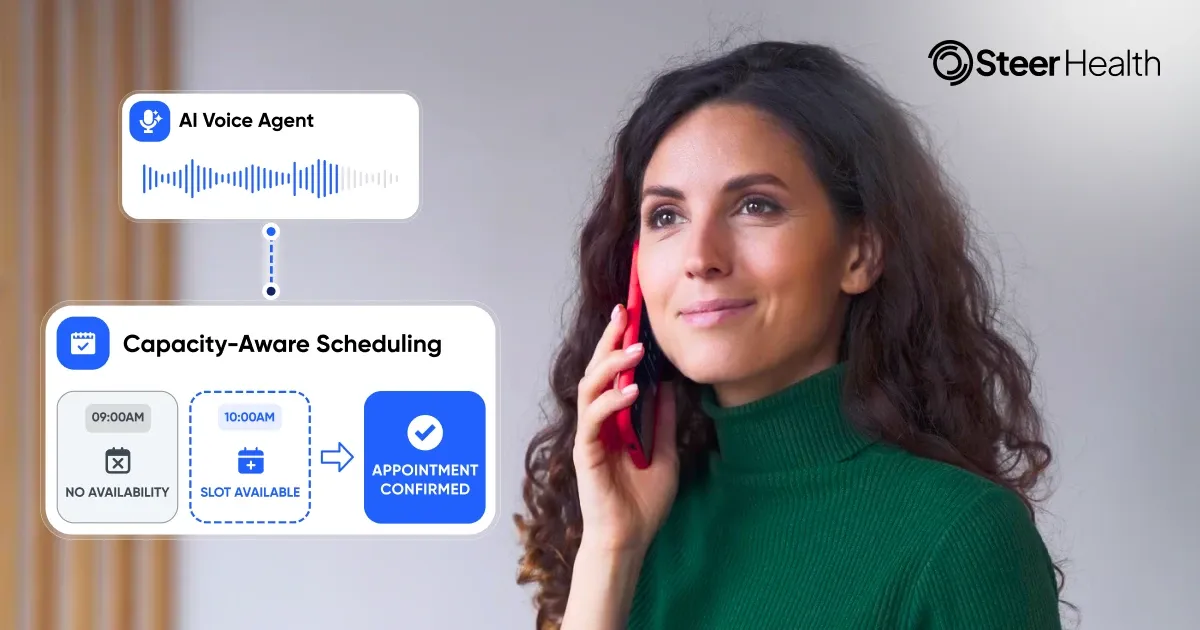
Inbound referral packets are captured, parsed, and worked on a strict first-in, first-out basis within minutes of arrival.Steer’s 24/7 conversational AI voice agent (Luna) answers inquiries in under two rings, verifies insurance eligibility before the visit, and books patients directly into open calendar slots according to your scheduling rules.
By combining automated intake with capacity-aware outreach, Steer delivers proven operational outcomes
- 98% Schedules Filled vs. an 81% specialty clinic benchmark.
- 2.2% No-Show Rate compared to the 18% to 20% national average.
- $4.5M Net New Revenue generated per facility, per year.
- 92%+ Copays & Deductibles Collected prior to the patient visit.
- 27,712 Monthly Calls Answered by Luna for Resurrection Medical Group, resolving 89% with zero human handoff.
See how an appointment scheduling system that converts referrals closes the gap between referral and booked visit.
Stop Referral Leakage Across Your Network
Tracking referrals in a passive inbox won'tfill your open appointment slots or prevent patients from seeking care out-of-network. Book a 30-minute demowith Steer Health today to model where your referral volume is leaking and see how 24/7 AI automation turns inbound orders into paid, completed visits.